“small coffee trees” search results (8000)
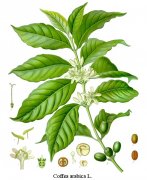
Coffee cultivation techniques detailed explanation of planting knowledge of Coffee trees
Coffee, cocoa and tea are called the three major beverages in the world, and their output, consumption and output value all rank first. In addition to being used as a beverage, coffee can also extract caffeine and coffee oil; in medicine, it can be used as an anesthetic, stimulant and diuretic cardiotonic agent. Coffee pulp can be used to make wine, vinegar, pectin and molasses; dried pulp can be used as animal feed; dried fruit shell can be used as fertilizer and burning
2015-02-16 Coffee cultivation techniques planting knowledge detailed explanation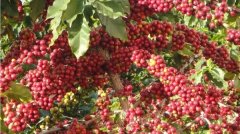
The process of the growth of coffee trees the process of roasting the fruits of coffee trees
The coffee tree is an evergreen tree with small white flowers and green flowers that turn red when it is mature. A normal coffee tree can usually grow to 5 to 10 meters high, but for the convenience of harvesting, bean farmers often prune it to less than 2 meters. After flowering, there are many dark green ellipses, and the mature ones change from dark green to bright red.
2015-11-05 Coffee tree growing process fruit roasting
The Origin of Yunnan small Coffee
Origin: in 1892, French missionary Father Tian succeeded in growing coffee in a place called Zhukula in Yunnan. Up to now, there are still 24 coffee trees which are more than 90 years old in Zhukula Township. Zhu Kula is a mysterious, legendary and beautiful natural village, which belongs to the Zhukula Village Committee of Pingchuan Town, Binchuan County, Dali Prefecture. It is located on the banks of Yupao River, a tributary of the Jinsha River. It is a Dali Prefecture and Chuxiong.
2015-06-05 Yunnan small grains Coffee Origin 1892 France Missionary Tian God
Planting Environment of Coffee species in Colombia
Species Morphology Editing Colombian Coffee Plant Morphology Colombian Coffee Plant Morphology (10 pieces) Colombian coffee is mainly small grain coffee. Plants are small trees or large shrubs, 5-8 m tall, usually much branched at base; old branches gray-white, nodes dilated, young branches glabrous, compressed. Leaves thinly leathery, ovate-lanceolate or lanceolate, 6-14 cm long, 3.5-5 cm wide, apex
2016-06-02 Columbia Coffee species form planting Environment Editor Brother
Main components of Yunnan small Coffee Fruit
Origin: in 1892, French missionary Father Tian succeeded in growing coffee in a place called Zhukula in Yunnan. Up to now, there are still 24 coffee trees which are more than 90 years old in Zhukula Township. Zhu Kula is a mysterious, legendary and beautiful natural village, which belongs to the Zhukula Village Committee of Pingchuan Town, Binchuan County, Dali Prefecture. It is located on the banks of Yupao River, a tributary of the Jinsha River. It is a Dali Prefecture and Chuxiong.
2015-09-24 Yunnan small grains coffee fruit main ingredients origin 1892 France
What kind of coffee does Coffee Manor produce?
Coffee tree is a shrub or small tree of Rubiaceae; leaves opposite, leathery, long ovate; every March, the branches will appear white flowers, petals spirally arranged, the heart of flowers jump around the petals, take a closer look, really like a small windmill playing in childhood, emitting bursts of jasmine fragrance; the fruit is oval, berries, crimson, containing two seeds, that is, we are familiar with coffee
2016-05-27 Mayer coffee manor production what growing.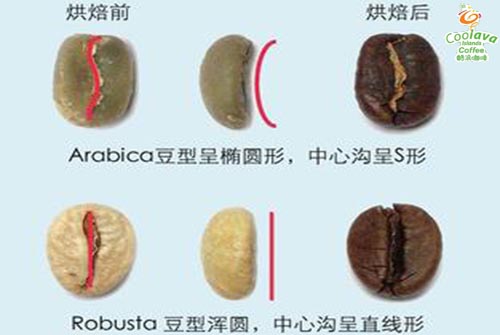
Boutique coffee beans: details of Arabica and the difference between Arabica and Robusta
Arabica Coffee Coffee Arabica many people have seen roasted coffee beans, but unless you have lived or traveled to coffee producing areas, you may not know coffee trees. The saplings are short-trimmed, but when they mature, they are 30 feet tall and covered with waxy leaves that grow symmetrically in dark green. The coffee fruit grows along the branches. After the white flowers are in full bloom and pollinated, the fruit takes a year to ripen.
2015-12-09 Boutique coffee beans rabbi details introduction and its Robes Booth difference
Colombia Coffee Region Flavor Taste Introduction Lazmus Manor
Colombia coffee varieties are mainly small coffee. Plants are small trees or large shrubs, 5-8 meters high, usually multi-branched at the base; old branches are gray, nodes expand, young branches glabrous, compressed. Leaves thinly leathery, ovate-lanceolate or lanceolate, 6-14 cm long, 3. 5 -5 cm wide, apex long acuminate, acuminate part 10-15 mm long, base cuneate or slightly obtuse, rarely rounded, entire or rounded
2016-07-20 Colombia Coffee Appellation Flavor Taste Introduction Morse Manor Goraz
Cultivation of Coffee Tree Seedling how to raise Coffee Tree
Tree name: coffee family: the morphological characteristics of evergreen trees of the subgenus Rubiaceae Coffee is a perennial evergreen shrub or small tree of Rubiaceae. It is a horticultural perennial cash crop with the characteristics of fast growth, high yield, high value and wide market. Wild coffee trees can grow up to 5 to 10 meters tall, but coffee trees planted on the manor, in order to increase fruit and facilitate harvesting
2015-11-05 Coffee seedlings planting cultivation how Arbor name Family and Genus Grass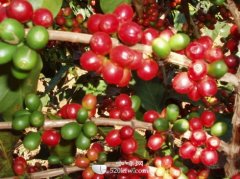
Coffee trees, coffee flowers, coffee fruits
The coffee tree is an evergreen tree with small white flowers and green fruit that does not turn red until it is ripe.
2014-07-16 Coffee knowledge coffee trees coffee flowers coffee fruits
The Origin of Yunnan small-grain Coffee
The origin of Yunnan small-grain coffee: in 1892, the French preacher Father Tian succeeded in experimenting with growing coffee in a place called Zhu Kula in Yunnan. To the city of Guzhu Kula, there are still 24 coffee trees with more than 90 years old. Zhu Kula is a mysterious, colorful and natural village, attached to the Zhukula Village Committee, Pingdi Town, Binchuan County, Dali Prefecture, located in the trunk of the Jinsha River.
2015-10-07 Yunnan small grains coffee planting origin 189
Colombian Coffee Flavor Manor introduction to Lazmus Manor
The main varieties of Colombian coffee are small grains of coffee. Plants are small trees or large shrubs, 5-8 m tall, usually much branched at base; old branches gray-white, nodes dilated, young branches glabrous, compressed. Leaves thinly leathery, ovate-lanceolate or lanceolate, 6-14 cm long and 3.5-5 cm wide, tip long acuminate, acuminate part 10-15 mm long, base cuneate or slightly obtuse, rarely rounded, entire or
2016-07-01 Columbia Coffee Flavor Taste Manor introduction Raz Moss Colombia
Arabica Coffee Coffee Arabica
Many people have seen roasted coffee beans, but unless you have lived or traveled to coffee producing areas, you may not know coffee trees. The saplings are short-trimmed, but when they mature, they are 30 feet tall and covered with waxy leaves that grow symmetrically in dark green. The coffee fruit grows along the branches. After the white flowers are in full bloom and pollinated, the fruit takes a year to ripen. Fruiting is a continuous cycle, so flowers
2014-06-30 Arabica coffee beans boutique coffee beans roasted coffee beans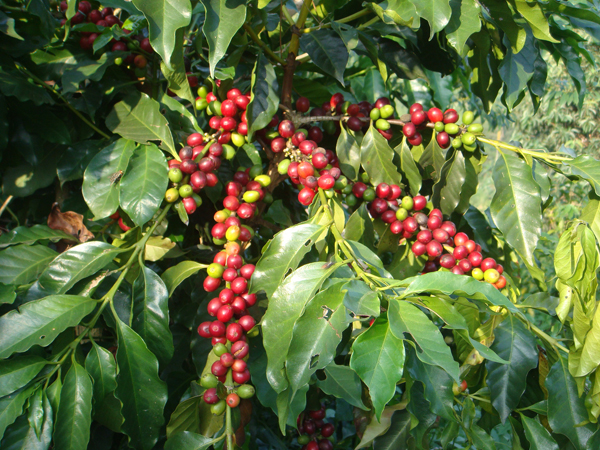
Explain the planting and cultivation of coffee trees in detail to understand the growth environment and needs of coffee trees.
(1) Seedling propagation Coffee seedling propagation can be divided into seed propagation and asexual reproduction. 1. Seed propagation (1) seed collection, seed washing and seed storage during the full ripening period of coffee (the full ripening period of medium-grain coffee in Hainan Island is from February to March, and that of small seed is from September to November). The fully ripe fruits are picked from strong and high-yielding mother trees to make seeds. Immediately after the fruit is harvested, peel and wash the seeds. The method is to place the fruit.
2015-11-25 Details explanation coffee planting cultivation understanding growth environment demand
What are the main types of coffee trees and where do most coffee trees grow?
The main species of coffee tree: Liberian species Liberian species or large seed species, native to Liberia in Africa, and Malaysia and a few other countries. It has a slightly shorter history than the other two coffee trees. The Liberian coffee tree is suitable for lowland cultivation. It has a tall and strong trunk, which is 18 meters high, large and tough leaves, and large fruits and coffee beans. Its seed coat clings to the kernel,
2016-05-27 coffee major category which mostly where production
The species morphology of coffee beans the planting environment of coffee the quality of coffee producing area
Plant morphology of Colombian coffee the main variety of Colombian coffee is small-grain coffee. Plants are small trees or large shrubs, 5-8 m tall, usually much branched at base; old branches gray-white, nodes dilated, young branches glabrous, compressed. Leaves thinly leathery, ovate-lanceolate or lanceolate, 6-14 cm long and 3.5-5 cm wide, tip long acuminate, acuminate part 10-15 mm long, base cuneate or
2016-05-25 Coffee beans species morphology coffee cultivation environment origin quality Colombia
How to grow coffee trees Which countries are most suitable for growing coffee Coffee growing conditions Introduction
Coffee trees bloom for the first time about three years old, white five-petaled tubular flowers, with a faint jasmine fragrance, dense inflorescences arranged in clusters. Flowers wither two or three days after flowering and begin to bear fruit a few months later. The fruit is a stone fruit, about 1.5 cm in diameter, initially green, then gradually yellow, mature into red, and cherry is very similar, because
2016-08-04 coffee how grow which country fit condition presentation
How high is the Liberian coffee tree planting environment Variety introduction treatment Plant
The main species of coffee trees: Esesa is a variety that was only discovered in 1904. It is native to the Charlie River Basin in Africa. It has small fruit and high yield per plant, especially a drought-resistant variety. The product has a strong flavor, slightly bitter taste and less cultivation. The main species of coffee trees: the first species of Arabica is Arabica beans, which account for 70% of the world's output.
2016-10-17 Liberia coffee how high planting environment producing area variety introduction treatment plant
What are the four main types of coffee trees?
Ethelsa species Ethelsa species is a variety discovered only in 1904, native to the Charlie River Valley in Africa, small fruit, high yield per plant, especially a drought-resistant variety. The product has strong flavor and slightly bitter taste. It is less cultivated in Liberia. Liberia is a large-grain species. It is native to Liberia in Africa and a few countries such as Malaysia. It's been cultivated longer
2016-06-06 Coffee Four Species Major Production Category Ethel Searle Saskatchewan 1904 Discovered
Colombian Coffee growing Environment Flavor and Taste introduce Fine Coffee
The main varieties of Colombian coffee are small grains of coffee. Plants are small trees or large shrubs, 5-8 m tall, usually much branched at base; old branches gray-white, nodes dilated, young branches glabrous, compressed. Leaves thinly leathery, ovate-lanceolate or lanceolate, 6-14 cm long and 3.5-5 cm wide, tip long acuminate, acuminate part 10-15 mm long, base cuneate or slightly obtuse, rarely rounded, entire or
2016-07-15 Colombia coffee planting environment producing area flavor taste introduction boutique brother